
You land at New Bight around 11 a.m. on a Thursday. The airport is a single runway, a small terminal building, and a man in an immigration uniform who recognizes the tail number of your PC-12 because it was here three weeks ago with different passengers. He stamps your passport, says welcome home, and you walk 60 feet to a Jeep waiting outside. There is no ground service agent. There is no fleet of taxis. There is no signage for car rentals. There is a road, a breeze, and 48 miles of coastline in both directions.
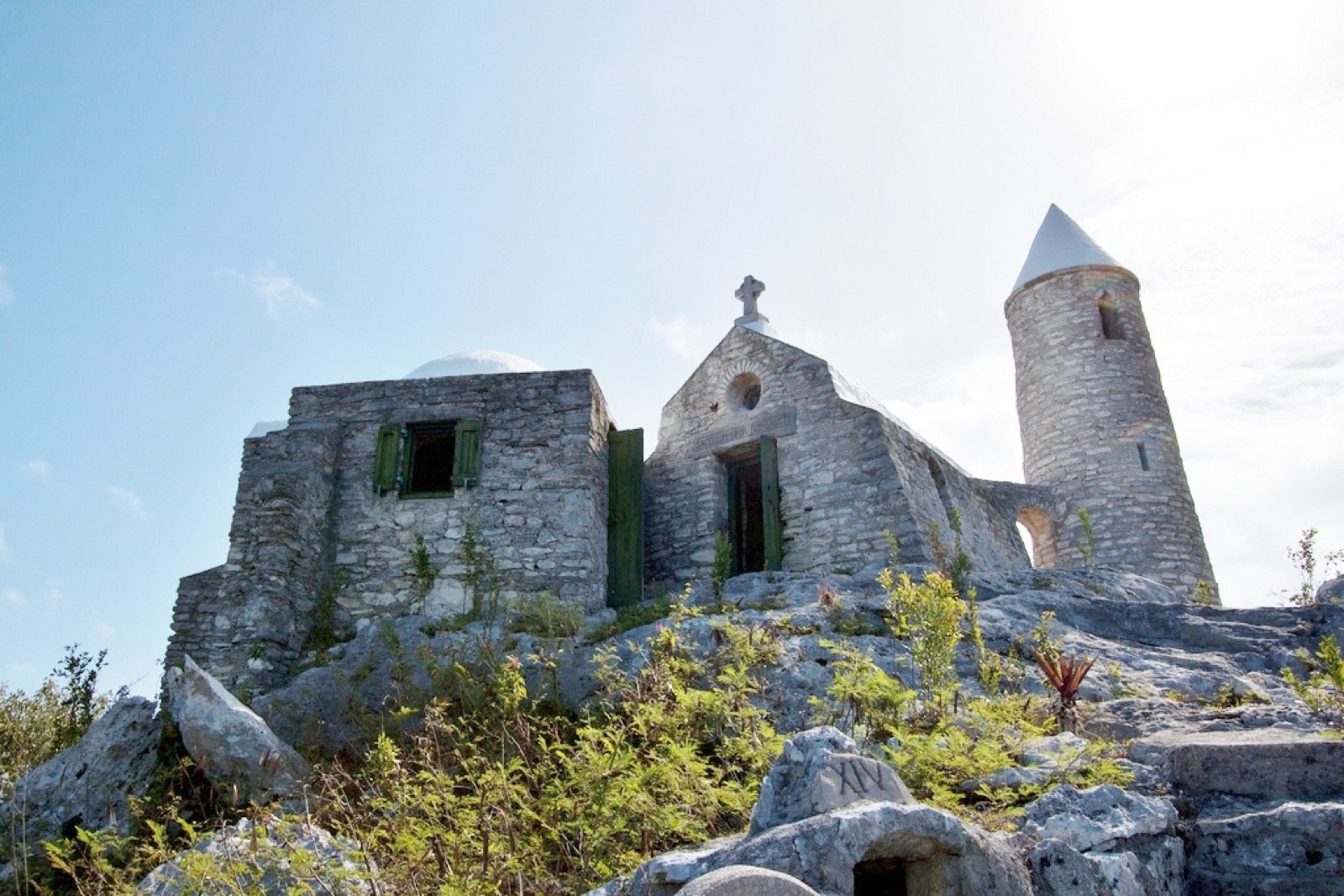
This is Cat Island. It is 130 miles southeast of Nassau, about the same size and shape as Long Island, and it holds fewer than 2,000 full time residents. It has no resort chains, no gated communities, no celebrity compounds, and no plans for any of the above. The single luxury property on the island has nine cottages and is run by the family that has owned it for three generations. The highest point in the Bahamas rises from the middle of the island and holds a stone monastery built by a self taught hermit priest 80 years ago. The music you hear in the roadside bars is rake and scrape, a sawed carpenter saw and an accordion and a goat skin drum, played the way it was played in 1940.
If you are looking for the Bahamas that existed before tourism arrived, this is where it still lives. This guide covers how to get here, what to do when you arrive, and why Cat Island has become the secret destination for a particular kind of private aviation traveler who has already seen everywhere else.
Quick Facts
- Primary airport: New Bight (MYCB), 5,100 ft paved
- Secondary airport: Arthur's Town (MYCA), 4,500 ft paved
- Flight time from FLL: 1h 15m light jet, 1h 30m turboprop
- Flight time from MIA: 1h 20m light jet
- Population: approximately 1,600 to 1,900
- Main settlements: New Bight, Arthur's Town, Port Howe
- Primary lodging: Fernandez Bay Village (9 units)
- Highest point: Mt Alvernia, 206 ft (highest in the Bahamas)
On This Page
- Why HNW privacy seekers pick Cat Island
- The airports, runways, and aircraft selection
- Fernandez Bay Village: the one luxury property
- The Hermitage on Mt Alvernia
- Beaches, Pigeon Cay, and the coast
- Rake and scrape music heritage
- What to pack (and what to leave behind)
- Sample 3 day itinerary
- Why Cat Island is the anti Atlantis
- Frequently asked questions
Why High Net Worth Privacy Seekers Pick Cat Island
There are roughly a dozen Bahamas islands and a handful of reasons you might fly private to any of them. Cat Island exists at an intersection that no other island quite matches.
Genuine low density. Harbour Island is private until it is not. At Thanksgiving the pink sand beach runs cabanas to the water line. Exuma's big resort clusters pull megayacht traffic that shapes the social feel of the island. Cat Island has no such cycle. The island is empty in the sense that Grand Bahama was empty in 1955. You can walk eight miles of beach without seeing another person in January.
No paparazzi infrastructure. Because Cat Island has no celebrity to chase, it has no tabloid logistics. No boat captains for hire to ferry photographers. No helicopter tour operators circling villas. No lifestyle journalists quietly on retainer. The privacy is structural, not contractual.
Bahamian cultural continuity. Many of our guests who have been to the Bahamas a dozen times describe Cat Island as the first place they felt they actually visited the Bahamas. The food is Bahamian (peas and rice, johnny cake, boil fish for breakfast, not the international hotel menu). The music is Bahamian. The church services on Sunday draw half the village. It is a functioning community rather than a tourism product.
Aviation access without capacity pressure. New Bight takes business jets. It rarely hosts more than two at a time. Compare this to Nassau, where peak Saturday afternoon holding patterns stack three and four deep over the approach. Cat Island operations are uncrowded in a way that shapes the arrival experience.
The Airports, Runways, and Aircraft Selection
New Bight (MYCB)
New Bight is the primary airport and handles essentially all international private charter traffic to the island. The runway is 5,100 feet of paved, maintained surface oriented roughly east west. It takes most turboprops without restriction and handles light jets comfortably (Citation CJ series, Phenom 100 and 300, Embraer Phenom 300E, HondaJet Elite). Midsize and super midsize jets are possible with performance planning; our operations team typically prefers to stage heavier aircraft at Nassau and run a turboprop connector from MYNN to MYCB for guests who need it.
The airport has daylight VFR operations as the standard. IFR is possible but ground services close by 6 p.m., so most operators plan arrivals before 5 p.m. local. Fuel is available but should be coordinated in advance rather than assumed; our FBO relationships ensure Jet A is positioned for our flights.
Customs and immigration are available at MYCB for flights arriving directly from the United States. The officers are typically present for scheduled traffic and on call for private arrivals. Clearance time is typically 10 to 15 minutes.
Arthur's Town (MYCA)
Arthur's Town serves the north end of the island. The runway is 4,500 feet of paved surface in adequate but less pristine condition. Primarily used by turboprops and smaller piston aircraft. Useful for guests staying at Pigeon Cay or at villas on the north coast, saving a 45 minute drive from New Bight. Customs service is limited; most international arrivals use MYCB.
Aircraft Selection
Our standing recommendation for Cat Island is a turboprop (PC-12 or King Air 350i). Three reasons. First, direct access to both airports with full performance margin. Second, the ability to fly VFR and maneuver around weather cells that would divert a light jet. Third, lower direct operating cost on the relatively short 1.5 hour flight, which often makes the PC-12 the better value even when a light jet is available.
If a light jet is preferred (faster, larger cabin, tall passenger comfort), a Citation CJ3 or Phenom 300 is the most common selection. Both operate comfortably into New Bight with standard fuel loads.
For onward connections to smaller strips nearby (Little San Salvador, Rum Cay, Conception Island), a turboprop is essentially required. PC-12s are the workhorses of this region.
Fernandez Bay Village: The One Luxury Property
Fernandez Bay Village is the anchor of luxury travel on Cat Island. It is not a resort in the international sense; it is a family owned compound of nine beachfront stone and wood cottages on a crescent of white sand in a protected cove, run by the Armbrister family since 1969. The original founder, Tony Armbrister, was a Bahamian who wanted to create a place where guests felt like friends of the family. His descendants still run it with the same philosophy.
The cottages are simple in the deliberate way that only expensive simplicity can be. Stone walls, mahogany floors, four poster beds with mosquito netting, outdoor showers, and private terraces that open directly to the beach. There are no televisions, and the wifi exists but is not aggressive. The main house holds the dining room, bar, and honor system liquor cabinet where guests pour their own drinks and sign a tab.
Meals are served family style at long wooden tables. Fresh caught fish, conch prepared seven ways, island grown vegetables, rum cakes baked that afternoon. The Armbristers know every guest by name by the second dinner. The staff is almost entirely Cat Islanders, and most have worked at the property for decades.
Total capacity is 18 guests at full occupancy. Rates run 900 to 1,800 dollars per night for the primary cottages and up to 3,500 for the two villas, meal plan inclusive. A full property buyout for private events is available at roughly 12,000 dollars per night plus service and is popular for intimate weddings, family reunions, and executive retreats.
Other lodging options on the island include Pigeon Cay Beach Club on the northwest coast (a smaller beachfront property with cottages and a restaurant) and several private villa rentals through local owners and Bahamas focused rental platforms. There are no chain hotels on Cat Island.
The Hermitage on Mt Alvernia
Mt Alvernia is the highest point in the Bahamas at 206 feet above sea level. On top of the hill sits the Hermitage, a small stone monastery built by Father Jerome Hawes between 1939 and 1940. Father Jerome was an Anglican turned Catholic priest, architect, and hermit who designed and built the structure by hand using local limestone. It is a place of remarkable atmospheric weight, unexpected in a country not known for religious monuments.
The path up begins near the village of New Bight. Carved stone stations of the cross line the trail, each depicting a moment of the passion, and each weathered to a texture that reads as centuries old despite being newer than most American suburbs. The climb takes 20 to 30 minutes depending on pace and is steep enough in sections to require deliberate footing. Water and comfortable shoes are essentials.
At the top, the Hermitage itself is a cluster of small structures built at approximately two thirds human scale. Father Jerome was a small man and built to his own proportions. The chapel, the bell tower, the garden, and the cells for sleeping are all miniaturized. Visitors frequently describe the experience as moving even when they are not religious. The views extend in every direction: Atlantic to the east, Exuma Sound to the west, the curve of Cat Island beach disappearing toward the horizon north and south.
There is no fee, no guide, and usually no other visitors. Sign the guest book in the small stone lectern. Leave a donation if you feel moved to. Descend before the afternoon heat sets in.
Beaches, Pigeon Cay, and the Coast
Cat Island's coast runs 48 miles on a narrow north south axis. The eastern shore faces the open Atlantic and takes the swell directly; it is rougher, with dramatic cliffs and high energy beaches that are excellent for walking and collecting sea glass. The western shore faces the protected Exuma Sound and holds the calmer beaches that most visitors come for.
Fernandez Bay's beach is the most accessible, a classic crescent of white sand on a protected cove that is swimmable in essentially any weather. Two miles north, Old Bight beach runs uninterrupted for more than a mile with nobody on it outside of Easter weekend.
Pigeon Cay, on the northwest coast, is one of the great undiscovered beaches in the Bahamas. Reached by a short drive and walk from the Pigeon Cay Beach Club, the beach extends several miles of powder sand under casuarina pines. Snorkeling is excellent off the reef 100 yards from shore. Bring lunch and water; there are no services once you are past the club.
Greenwood Beach Resort area at the south end of the island has a magnificent 8 mile stretch of Atlantic beach that is essentially always empty. Good for long walks and beachcombing. Swimming conditions vary with swell.
Bonefishing on the flats east and south of the island is excellent. Local guides can be arranged through Fernandez Bay or through Bonafide Bonefishing in Port Howe. Expect to pay 500 to 700 dollars per day for a guided skiff with two anglers.
Rake and Scrape Music Heritage
Cat Island is the spiritual home of rake and scrape, the traditional Bahamian music built around a carpenter saw played with a knife, a goat skin drum, and an accordion or concertina. The rhythm is slow, hypnotic, and unmistakably African in its polyrhythmic structure, carried to the Bahamas by enslaved West Africans and maintained here in a form that has disappeared from most of the country.
The annual Rake and Scrape Festival, held on Cat Island each June over the Labour Day long weekend, is the premier event on the Bahamian cultural calendar for traditional music. Bands from across the out islands perform at outdoor venues across New Bight, Arthur's Town, and Smith Bay. If you are visiting during this window, it reshapes the entire trip.
Outside the festival, local bars in New Bight and Port Howe host impromptu sessions on weekend nights. Ask at Fernandez Bay or at one of the roadside bar-restaurants where the saw is playing that night. You will not need reservations. You may need small bills for tips.
What to Pack (And What to Leave Behind)
Cat Island has limited services. The small grocery stores in New Bight carry the basics but are not fully stocked on luxury items. Plan to arrive self sufficient.
Cash. ATMs are limited and unreliable. Bring enough US cash for incidentals, tips, taxi drivers, small purchases, and bar rounds. Plan on 300 to 500 dollars per person per week in cash beyond any resort charges.
Prescription medications. The island has basic clinic service but no full pharmacy. Bring any prescriptions in their original bottles with enough surplus for the trip.
Reef safe sunscreen. Local shops carry sunscreen but selection is narrow and prices are high.
Insect repellent. Mosquitoes are moderate in winter and intense in summer, especially at dusk. Bring DEET or picaridin repellent.
Hiking shoes for Mt Alvernia. Flip flops will not make the climb comfortably.
Snorkel gear. Fernandez Bay has gear for guests but quality varies. If snorkeling is central to your trip, bring your own mask, snorkel, and fins.
A bottle of your preferred spirit. Local bars stock basics. If you drink a specific rum, bourbon, or mezcal, consider flying it in. (Customs allowance is typically 1 liter per adult; declare on arrival.)
What to leave behind. Formal attire is unnecessary. Most dinners even at Fernandez Bay are dressed casually. Laptops and elaborate electronics feel out of place; this is an island that rewards disconnection. Consider travel light and let the island dictate pace.
Sample 3 Day Itinerary
Day 1: Arrival and First Impressions
Morning departure from Fort Lauderdale or Palm Beach, wheels up around 10 a.m. for a 1 hour 15 minute flight to New Bight. Customs clearance in under 20 minutes. Transfer to Fernandez Bay Village (10 minutes from MYCB).
Lunch at the main house, light swim at the beach, siesta. Afternoon walk on the beach north toward Old Bight (approximately 40 minutes each way). Evening rum punches, dinner family style, stargazing from the beach. Go to bed early.
Day 2: Mt Alvernia and the South End
Early breakfast at 7 a.m., on the road by 8. Drive 10 minutes to New Bight village and begin the climb to the Hermitage. Allow 90 minutes for the round trip with time to explore at the top. Return to Fernandez Bay for mid morning swim and lunch.
Afternoon drive south to Port Howe and Greenwood Beach. Long walk on the Atlantic shore, beach combing, time in the water. Return north in late afternoon, dinner at Fernandez Bay or at one of the small local restaurants in New Bight. Rake and scrape if the schedule permits.
Day 3: Snorkel, Pigeon Cay, Depart
Guided snorkel excursion in the morning to the inner reef near Fernandez Bay. Alternatively, drive north to Pigeon Cay for 3 to 4 hours on the beach. Lunch picnic packed by the resort kitchen. Return to Fernandez Bay by 2 p.m.
Light lunch and swim, then 15 minute drive to New Bight Airport for a 4 p.m. departure. On the ground in Fort Lauderdale before 6 p.m.
For longer trips, add a day for a private boat charter to Little San Salvador (Columbus's first landfall in the New World according to some historians) or connect onward to Long Island or Exuma by short charter flight through our inter island network.
Why Cat Island Is the Anti Atlantis
There is a place for Atlantis. There is also, increasingly, a market for its opposite.
Atlantis is the Bahamas at full tourism scale: 3,800 rooms, an aquarium, waterslides, celebrity chef restaurants, and a marina where 200 foot yachts rent slips at peak season rates. It does what it does exceptionally well. It also defines what the Bahamas means for most Americans.
Cat Island is what the Bahamas meant before Atlantis existed. Nine cottages. One restaurant that closes at nine. Two gas stations on a 48 mile island. A hermitage on the highest hill that a priest built with his hands because he wanted somewhere quiet to pray. Rake and scrape bands that still play the same rhythms the same way. A population that has not doubled in 60 years and does not want to.
For high net worth travelers whose lives are dense with infrastructure, scale, and attention, this emptiness is the entire point. You can decompress on Cat Island in a way that is no longer possible at the island resorts that have figured out how to monetize every square foot. The Wall Street Journal reader who owns three houses and a jet card flies to Cat Island not to be pampered but to be briefly, genuinely, forgotten. Other out islands that offer similar character include private island rentals elsewhere in the country and the smaller cays of the southern Bahamas.
Cat Island is also an investment hedge against the Bahamas of the future. Every other out island is on a development arc. Exuma has the Ritz-Carlton Reserve coming in. The Abacos are rebuilding at higher price points than before Dorian. Harbour Island's pink sand beach saw its first high rise proposed last year. Cat Island is the one big out island that has credibly committed to remaining what it is. That makes today's visit uniquely valuable: this is what the Bahamas will always be on this island, and one of the few places where that is still true.
See the full Cat Island destination guide for expanded resort, dining, and activity details, and browse all Bahamas resort options for alternatives if you want to compare.
Frequently Asked Questions
Which airport serves Cat Island?
The primary airport is New Bight (MYCB), located in the center of the island near the village of New Bight. It has a 5,100 foot paved runway and handles turboprops and light jets. A secondary strip, Arthur's Town (MYCA), serves the north end of the island with a 4,500 foot runway primarily for smaller aircraft.
How long does it take to fly from Florida to Cat Island?
Fort Lauderdale to New Bight runs approximately 1 hour 15 minutes in a light jet. Miami to New Bight runs approximately 1 hour 20 minutes. Turboprops add 10 to 15 minutes. Direct flights bypass Nassau and land you on Cat Island in a single leg.
Where do you stay on Cat Island?
The flagship property is Fernandez Bay Village, a family owned resort with nine beachfront cottages and villas. Other options include Pigeon Cay Beach Club on the northwest coast and several private villas. Rosewood and similar international brands have no presence on the island.
Is there mobile service and ATM access on Cat Island?
Mobile coverage is spotty outside New Bight. There are limited ATMs on the island and very few card payment terminals outside the resorts. Bring cash in small denominations. Most restaurants, taxi drivers, and small shops prefer cash.
What makes Cat Island different from Exuma or Harbour Island?
No resorts of scale, no celebrity infrastructure, minimal tourism footprint. Cat Island retains traditional Bahamian culture including rake and scrape music and historic settlements like the Hermitage. It is the Bahamas as it existed in the 1960s, before tourism development reshaped the out islands.
Fly Private to Cat Island
Direct charter from Fort Lauderdale or Miami to New Bight in under 90 minutes. PC-12 turboprops and Citation light jets available. Call +1 (561) 664-7695 or request a custom quote.
REQUEST A QUOTE