
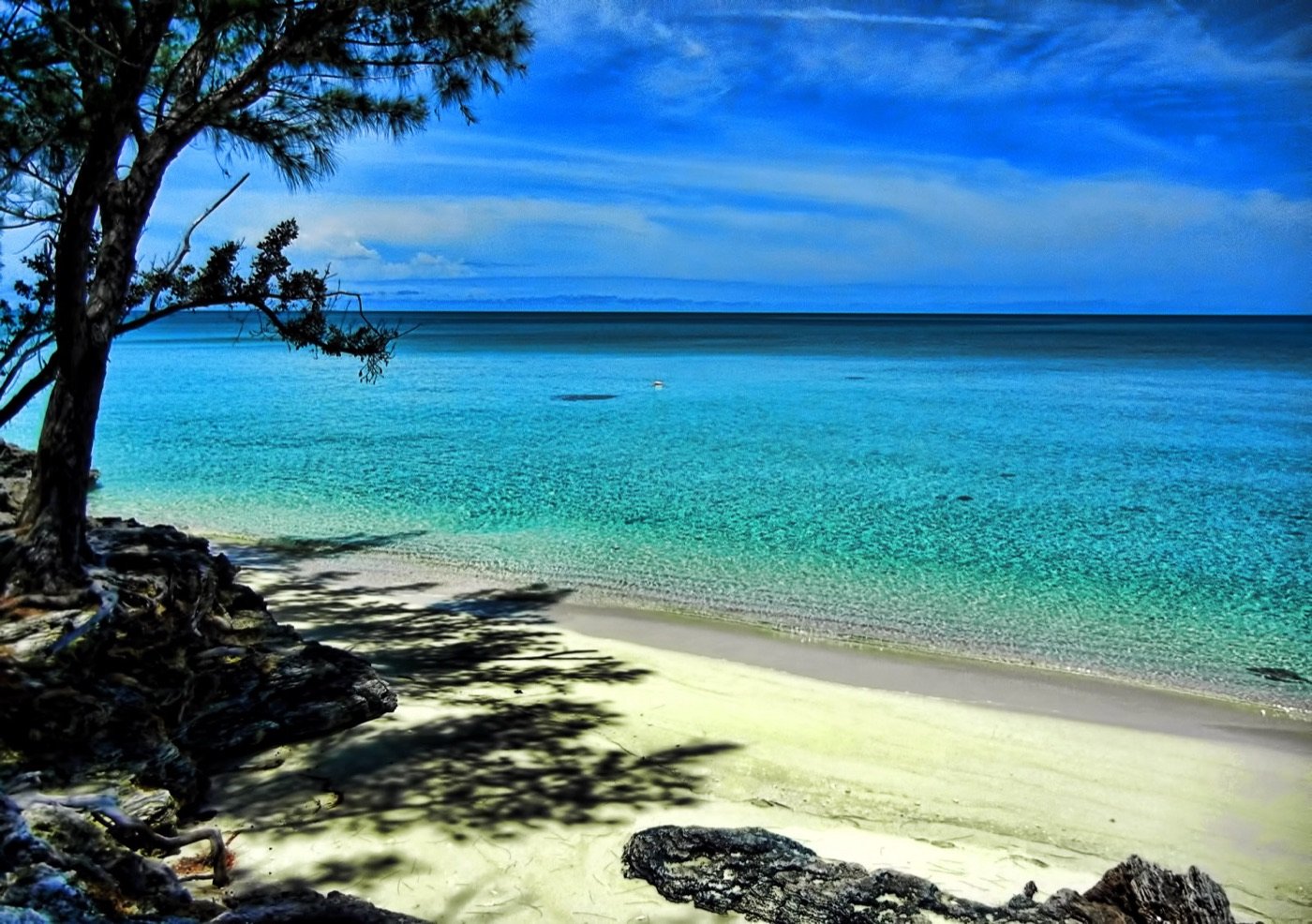
If you want to understand the Bahamas, look at who visits in summer. Not the Atlantis crowds, who peak at spring break. Not the Harbour Island set, who migrate in for Thanksgiving and leave at Easter. Look at the slim group of travelers flying into George Town in late June, into Marsh Harbour in August, into North Eleuthera on a Tuesday in mid September. They are almost always locals, second home owners, and the travel professionals who plan other people's trips. There is a reason.
Summer is the best time to see the Bahamas. The water runs 85 to 87 degrees with visibility that touches 150 feet. The reefs are at their most active. The light is longer, the crowds are gone, and resorts trade peak season rates for shoulder pricing that runs 30 to 40 percent lower. The only cost is a half hour of afternoon weather, most of which is beautiful to watch from a covered terrace with a rum punch.
The catch, as any local will tell you, is that you have to fly private to get the most out of it. Commercial schedules collapse under summer storms because airlines hold aircraft on the ground to protect hub rotations. A single afternoon thunderstorm over Nassau can cascade into 48 hours of cancelations for leisure travelers. Private charter does not play by those rules. This guide explains why summer is the insider's Bahamas season and how to fly it properly.
Summer Quick Facts
- Water temperature (Jun-Sep): 84 to 88 degrees F
- Snorkel visibility: 100 to 150 feet, best months Jun-Sep
- Afternoon storm window: Typically 2 to 6 p.m., clears by sunset
- Hurricane season: Jun 1 - Nov 30, peak Aug-Oct
- Resort pricing vs peak: 30 to 40 percent lower
- Empty leg availability: Significantly higher than winter
On This Page
- The weather reality and the myth around it
- Why private is better in summer than at any other time
- Water, visibility, and the snorkeling argument
- Summer events worth flying for
- Best departure strategy: morning wins
- Hurricane preparation and the Vanbert protocol
- Best aircraft for summer operations
- Cost savings by month
- Frequently asked questions
The Weather Reality and the Myth Around It
Start with numbers. Hurricane season runs from June 1 through November 30 under the National Hurricane Center calendar. That is six months. In any given year, the Bahamas sees a close pass or direct hit from a named storm roughly once. In bad years, maybe three. That means something like 5 to 10 days of genuinely bad weather distributed across 183 days of hurricane season. The other 95 percent of summer days have outstanding flying conditions.
What does happen daily in summer is the convective afternoon pattern. Trade wind air loads moisture over the shallow banks. By late morning cumulus builds. By early afternoon, the largest clouds organize into thunderstorms. By 6 p.m. those storms have typically dissipated and left you with a spectacular sunset. This is not a bug. It is the rhythm of the tropics, and it is what makes the water so warm and the light so dramatic at dusk.
The misread among travelers is that a summer afternoon storm equals a canceled day. It does not. A typical summer storm lasts 30 to 90 minutes, moves through at 10 to 15 knots, and leaves the air cooler and the reef life energized. Locals plan around it: beach in the morning, lunch and siesta through the storm, back out after four, dinner at eight. If you match that rhythm, summer in the Bahamas is paradise.
Flying around it requires a similar shift. The aviation rule is simple: depart in the morning. Most weather forms after 11 a.m. local time. A 9 a.m. departure from Fort Lauderdale puts you on the ground in Nassau at 9:45, wheels up for Exuma at 10:30, landing in George Town before 11. By the time storms are organizing over Andros, you are already poolside.
Why Private Is Better in Summer Than at Any Other Time
Summer is where the value of private aviation compounds most. In winter, private is a preference. In summer, private is an insurance policy against the commercial system that is designed to fail gracefully and makes you pay the price when it does.
Departure flexibility. When a storm line is tracking across South Florida at a 2 p.m. estimate, Vanbert operations will shift your departure to 9:30 a.m. and brief you the night before. Commercial schedules cannot do that. Their 4 p.m. Nassau departure leaves at 4 p.m. or it cancels.
Routing flexibility. If convection is building over Bimini, our pilots file a southern route through Key West approach. The flight is 15 minutes longer. You never see the storm. Commercial flights follow filed routes through congested airspace and end up holding or diverting.
Pre storm evacuation. When a named hurricane enters the seven day cone, we begin the conversation at 5 days out and execute evacuations at 72 to 48 hours ahead of landfall. Commercial airlines typically cancel within 48 hours and leave guests stranded with no way out.
Aircraft waiting on the ground. Private aircraft sit on the ramp at the destination. If you need to leave two days early to avoid weather, we call the crew and go. There is no rebooking, no fare difference, no availability check.
Ground coordination. Vanbert's Bahamas operations team is on island. If a tropical system is organizing in the lower Caribbean, our Nassau staff is tracking it locally and will flag concerns that satellite data does not capture.
Water, Visibility, and the Snorkeling Argument
This is the single most underrated fact about Bahamas summer travel: the ocean is at its peak from late June through September. Surface temperatures average 85 to 87 degrees, which is bath water warm without being uncomfortable. More importantly, the thermocline is deeper in summer, which means visibility extends down through the water column further than at any other time of year.
Snorkel operators on Exuma will tell you the best visibility window of the year is July through early September, with 120 to 150 foot visibility on calm days. The swimming pigs at Big Major look better. Thunderball Grotto (the cave system used in the James Bond films) is at its most photogenic because afternoon sunlight penetrates the cavern roof at sharper angles during summer solar declination. The nurse sharks at Compass Cay are more active in warmer water. The Andros Barrier Reef, third largest on earth, runs dive conditions that rival any destination in the Caribbean.
Bonefishing on the flats of Andros, Abaco, and Long Island is excellent through the summer. Tarpon migration peaks in June and July. Mahi mahi, wahoo, and blue marlin are on feed across the deeper drop offs outside Nassau and Eleuthera.
Beaches are emptier. Harbour Island's Pink Sands runs half capacity in July compared to March. Cabbage Beach on Paradise Island is walkable without weaving around sunbeds. Tropic of Cancer Beach on Little Exuma is essentially empty on a midweek day in August.
Summer Events Worth Flying For
Summer delivers a cluster of cultural events that do not run in winter. If you are designing a trip around experience rather than just beach time, these are the anchor dates.
Junkanoo Summer Festival. Nassau's biggest cultural event outside the famous Boxing Day and New Year's Day Junkanoo parades. The summer edition runs across July weekends on Arawak Cay and features the same brass, goat skin drums, and cowbell driven rhythms that define Bahamian music. Family friendly, vibrant, and a complete contrast to the quieter island experience.
Bahamas International Film Festival. Held in select summer weeks with screenings and industry events in Nassau. Draws a Caribbean film community that skews younger and more international than the typical luxury winter crowd.
Regatta Time in Abaco. The premier sailing event in the Bahamas, running early July across Marsh Harbour, Green Turtle Cay, and Treasure Cay. Locally built Abaco dinghies race during the day and the bars spill onto the docks at night. Charter a house on Green Turtle for the week and fly into Treasure Cay Airport (MYAT).
All Andros Regatta. Late June, centered on Morgans Bluff. Smaller than Abaco but more traditional, with Bahamian A class sloops racing against a backdrop of the Andros Barrier Reef.
Long Island Regatta. Early June, held in Salt Pond. One of the oldest regattas in the Bahamas and the best opportunity to see classic Bahamian sloop racing without the crowds.
Emancipation Day (August 1). National holiday with island wide festivities. Nassau hosts a Junkanoo Rush Out in the early morning hours. Plan ground transportation in advance; some routes close for parades.
Independence Day (July 10). Bahamian national day, marked by fireworks over Montagu Bay in Nassau and community celebrations across the Family Islands. Significant tourist events draw into the capital but outer islands remain peaceful.
Best Departure Strategy: Morning Wins
The single most actionable piece of summer flying advice: depart in the morning. The pattern is reliable enough to plan against. Here is how the day typically progresses across South Florida and the Bahamas.
6 to 9 a.m.: Smooth air, unlimited visibility, no convection. Ideal for departures from Fort Lauderdale, Palm Beach, Opa Locka, or Miami. CBP outbound processing is quickest in this window.
9 to 11 a.m.: Cumulus starts to build over the banks. Flights are still routine but pilots may begin filing alternate routing to stay clear of rising cells. Visibility excellent.
11 a.m. to 2 p.m.: Transition window. Some cells reach thunderstorm strength. Most flights still operate, but departures may be held 20 to 60 minutes to let cells pass.
2 to 6 p.m.: Peak convection. Thunderstorms well organized over the banks and often over Nassau. Departures into this window may require significant deviation or delay. This is when commercial schedules crack.
6 to 9 p.m.: Clearing window. Storms dissipate and evening flights operate routinely with dramatic sunset views from altitude.
Our default summer recommendation: outbound flights depart before 11 a.m. local, return flights depart after 6 p.m. or before 10 a.m. Same day round trips to Nassau or Exuma work beautifully in this pattern. For couples flying in Thursday and out Sunday, we book morning departures both directions.
Pro Tip: Morning Arrivals Unlock Full Days
A 7:30 a.m. departure from Fort Lauderdale (KFXE) puts you on the ground in Nassau (MYNN) at 8:25. By the time the customs officer has stamped your passport, your hotel has your room ready and you have the entire day ahead of you. Compare that to the typical commercial afternoon arrival that costs you a half day to travel and another half day to recover.
Hurricane Preparation and the Vanbert Protocol
Tropical systems are the only genuine risk in summer Bahamas travel, and they are manageable if you have the right operational partner. Vanbert runs a three tier hurricane protocol that has evacuated charter guests from every named storm since we started operations.
7 to 5 days out. When the National Hurricane Center begins issuing advisories on a system that models suggest may approach the Bahamas, our operations desk opens a watch file. All charter clients within the potential impact window receive an advisory email summarizing the forecast cone, timing confidence, and the options we can offer.
72 hours out. If the system remains in the cone, we proactively contact all affected trips and offer three options: depart early (up to 72 hours ahead of the original return), delay arrival (push departure into the United States until after the system clears), or relocate the aircraft to a safe alternate island outside the cone. Our cancellation and weather policy makes all three options no penalty.
48 hours out. Active evacuations begin if requested. We coordinate with FBOs in Nassau, Marsh Harbour, George Town, and other impacted airports to prioritize fueling, sequence departures, and get clients back to the United States ahead of airport closures. Nassau typically closes 12 to 24 hours before landfall. We operate until the airport closes.
Post storm. Our Bahamas operations team works with local authorities and FBOs to coordinate return flights. Typically the Bahamas reopens commercial traffic 24 to 72 hours after a storm clears. Private aviation often operates sooner into airports that remained operational.
Importantly, we will not operate an aircraft into a forecast hazard. If the weather is unsafe, we do not fly, and the client is not penalized. This is a non negotiable part of how we run. Safety is the floor under every other operational decision.
Best Aircraft for Summer Operations
Summer flying rewards different aircraft characteristics than winter. Here is the calculus.
Turboprops: Pilatus PC-12, King Air 350i
Turboprops are the summer workhorses for the outer islands. Lower fuel burn means you can afford to wait on the ground if a storm cell passes over the airport. Higher rate of climb on short runways means access to small airstrips that jets cannot use (Staniel Cay, New Bight on Cat Island, Stella Maris on Long Island). Ability to operate VFR in marginal weather where IFR jet traffic is holding gives schedule resilience.
For a summer Exuma trip that includes Staniel Cay, Black Point, or Compass Cay, a PC-12 is almost always the right aircraft. See our full fleet guide for availability.
Light and Midsize Jets: Citation CJ3, Citation XLS+, Phenom 300
For Nassau, Marsh Harbour, and North Eleuthera, light and midsize jets deliver speed and the ability to climb above storm tops (most Bahamas thunderstorms top out at 35,000 to 45,000 feet, within reach of most business jets). The value is getting above weather rather than waiting on the ground beneath it.
Super Midsize and Heavy: Challenger 350, Gulfstream G280
For same day Florida to Turks and Caicos or Florida to Exuma round trips where the group wants maximum cabin comfort, super midsize jets are the correct tool. They are also the preferred platform for longer reach trips that may touch Puerto Rico, Antigua, or the Dominican Republic on the same itinerary.
Insurance and Trip Protection
For summer travel, cabin class trip protection is a small percentage premium on top of charter cost and covers non refundable deposits if a named storm forces cancellation inside the weather policy window. Vanbert works with a specialty aviation travel underwriter for clients who want an extra layer of protection. Most major credit cards also offer trip cancellation coverage at no additional cost; verify before you assume.
Cost Savings by Month
Summer pricing in the Bahamas is the closest thing to a secret deal in Caribbean luxury travel. Here is the detailed shape, in percentage off peak season rates, across the key summer months.
| Month | Resort Rate vs Peak | Charter Availability | Weather Risk |
|---|---|---|---|
| May | -20% to -25% | Excellent | Very Low |
| June | -30% to -35% | Excellent | Low |
| July | -35% to -40% | Excellent | Low to Moderate |
| August | -35% to -45% | Very Good | Moderate |
| September | -40% to -50% | Very Good | Moderate to High (peak cane) |
| October | -30% to -40% | Very Good | Moderate |
| November (early) | -15% to -25% | Good | Low |
Several notes on reading this table. September is statistically the deepest discount month because it coincides with peak hurricane climatology (September 10 is the historical peak date). In most years, September is also one of the calmest weather months on the ground, and the value is exceptional for travelers with flexibility. October delivers strong value with declining storm risk.
Empty leg availability in summer runs roughly 40 percent above winter levels because charter operators reposition aircraft more actively to balance summer domestic United States demand (Nantucket, Aspen summer season, Montana fishing) with reduced Caribbean demand. Sign up for the Vanbert deals board to capture these opportunities: empty leg flights between Florida and Nassau can run 60 to 80 percent off standard charter pricing.
For more on month by month Bahamas timing, see our full best time to visit the Bahamas guide.
Frequently Asked Questions
Is it safe to fly to the Bahamas during hurricane season?
Yes, with active planning. Hurricanes telegraph their approach 5 to 7 days in advance. Vanbert tracks every tropical system and pre positions aircraft to depart 48 to 72 hours ahead of a landfall threat. The vast majority of summer days in the Bahamas have excellent flying weather.
How much cheaper is the Bahamas in summer compared to peak season?
Resort room rates drop 30 to 40 percent between Memorial Day and Thanksgiving. Private charter pricing is more stable but empty leg availability increases significantly, and weekday charters run 10 to 15 percent below peak season rates.
When do afternoon thunderstorms typically form?
The Bahamas pattern runs clear mornings, building cumulus by late morning, organized storms between 2 and 6 p.m., and clearing by sunset. Morning departures before 11 a.m. almost always avoid weather delays.
What does Vanbert do when a hurricane is forecast?
At 5 days out we advise of the storm. At 72 hours we offer no penalty reschedules or early departures. At 48 hours we execute evacuations if requested. Our cancellation policy protects charter deposits when named storms force itinerary changes.
Are turboprops or jets better for summer Bahamas travel?
Jets prioritize speed and altitude, which is useful when you want to climb above weather. Turboprops can operate into smaller outer island airports and wait out pop up storms with lower direct operating costs. For summer itineraries that include Cat Island, Long Island, or Acklins, turboprops are often the practical choice.
Plan a Summer Bahamas Trip
Vanbert's operations team monitors weather 24/7 from June through November. Call +1 (561) 664-7695 or see our live flight board for current availability, empty legs, and shared shuttle seats.
EXPLORE THE BAHAMAS HUB